Blog

  • Selling Stocks After a Big Raise: Why Your Tax Bill Explodes

    Selling Stocks After a Big Raise: Why Your Tax Bill Explodes

    There’s a nasty surprise lurking for anyone who gets a big raise and decides for selling stocks shortly afterward. You think you’re finally “making it,” maybe cashing out a few shares to celebrate or rebalance your portfolio—and then bam! Your tax bill looks like it went through a steroid regimen behind your back.

    It isn’t bad luck. It isn’t some hidden IRS trick. It’s math. Specifically, it’s the combo of income stacking and a widespread misunderstanding of marginal versus effective tax rates. Once you understand how these gears mesh, the shock stops being mysterious and starts being something you can plan around. read more

  • Selling Stocks While Abroad: How Capital Gains Tax Works for Expats

    Selling Stocks While Abroad: How Capital Gains Tax Works for Expats

    Selling Stocks While Abroad: How Capital Gains Tax Works for Expats

    Moving to another country might mean freedom on a platter: a new city, a new experience, or perhaps a lower tax rate if you’re lucky. One area where nothing changes when you move to a different land, though, is in taxes. To sell stocks successfully, the big difference is not necessarily the place you’re currently sipping coffee in. It’s where the tax residency belongs to you.

    Getting it wrong can mean paying zero tax when you should pay double or even more. Understanding how capital gains tax applies to expats is essential before making any stock sales. read more

  • Capital Gains Tax and Social Security: The Retirement Trap Nobody Warns You About

    Capital Gains Tax and Social Security: The Retirement Trap Nobody Warns You About

    You finally reach retirement.

    The mortgage is lighter—or maybe completely gone. Your portfolio has done its job. Social Security checks start rolling in, steady and predictable. Life seems… peaceful.

    Then you decide to sell some stocks—maybe to fund a long-awaited trip, cover an unexpected medical expense, or simply rebalance your portfolio. And suddenly, your tax bill spikes. Way higher than you expected.

    What just happened?

    Welcome to the little-known Social Security + capital gains trap, fueled by something most retirees never hear about until it’s too late: provisional income stacking. read more

  • Capital Gains Tax Checklist: Everything to Review Before You Sell

    Capital Gains Tax Checklist: Everything to Review Before You Sell

    Selling an investment can feel exciting. That moment when you finally hit “sell” after watching a stock, mutual fund, or other asset climb for months—or even years—gives you a mini adrenaline rush. But there’s a less glamorous side to selling: taxes. Specifically, capital gains tax.

    Ignoring this step can turn a celebratory sale into a post-April panic. That’s why having a checklist before you sell isn’t optional—it’s essential. Think of this as your mental walkthrough for capital gains tax. Hit every checkpoint, and there should be no ugly surprises later. read more

  • I Sold Stocks in Multiple Years — How Does the IRS Track My Capital Gains?

    I Sold Stocks in Multiple Years — How Does the IRS Track My Capital Gains?

    You sold some stocks in 2022. More in 2023. Maybe a little panic-selling in 2024. Now it’s tax season and your brain is doing that fun thing where it imagines an IRS agent squinting at a screen, whispering, “Interesting…”

    If this scenario sounds familiar, you’re not alone. Multi-year stock selling can feel like juggling flaming torches while blindfolded — except the torches are your money, and the blindfold is a mix of 1099 forms, cost basis confusion, and IRS rules.

    Here’s the core anxiety: How does the IRS track capital gains across multiple years — and what happens if things don’t line up perfectly? read more

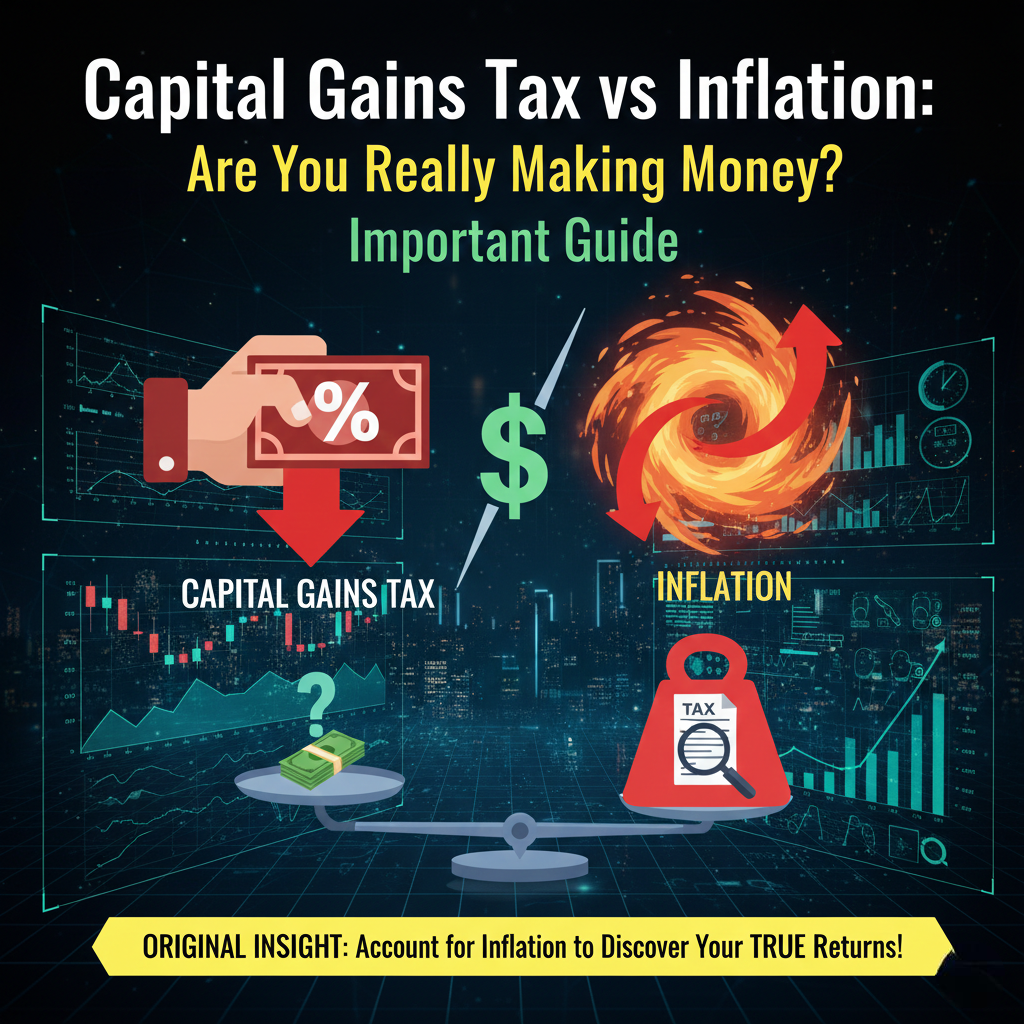
  • Capital Gains vs Inflation: The Illusion of Profit

    Capital Gains vs Inflation: The Illusion of Profit

    When people brag about making “10% a year” on their investments, they usually mean nominal returns—the raw numbers staring back at you from your brokerage app. Those shiny digits feel great. But here’s the catch: money doesn’t live in a vacuum. It lives in the real world, where prices rise, taxes exist (tragically), and time slowly eats away at your purchasing power.

    The number your broker flashes? That’s just the surface. Your real capital gains return—the number that actually affects your life—is what’s left after inflation and taxes. And once you factor in both, that seemingly impressive return often loses a lot of its swagger. read more

  • How to Estimate Capital Gains Tax Before You Sell (Without a CPA)

    How to Estimate Capital Gains Tax Before You Sell (Without a CPA)

    There’s a very specific kind of stress that hits right before you sell an investment. You’re staring at the screen, hovering over the “sell” button. Your numbers look good, your gut says “Go for it!”—and then that tiny voice in the back of your mind whispers:

    “Wait… how much of this am I actually allowed to keep?”

    That, my friend, is pre-sale anxiety. It’s real. Almost every investor feels it—stocks, crypto, property, collectibles, you name it. The fear isn’t the market; it’s the unknown bite of the capital gains tax bill. And the kicker? Most people only realize how much they owe after they sell. Cue regret, stress, and a frantic Google search. read more

  • Capital Gains Tax on ETFs vs Individual Stocks: Is There a Big Difference?

    Capital Gains Tax on ETFs vs Individual Stocks: Is There a Big Difference?

    On the surface, ETFs and individual stocks feel like twins wearing different outfits.

    You buy them.
    They (hopefully) go up.
    You sell them.
    You pay capital gains tax.

    Simple… right?

    Not quite.

    A lot of investors discover—often painfully—that ETFs and individual stocks behave very differently once taxes enter the chat. Some people even get hit with capital gains taxes without selling anything at all, which feels deeply illegal, emotionally speaking.

    And nine times out of ten, ETFs are the culprit.

    If you’ve ever opened a tax statement and thought: read more

  • How Much Insane Amounts of Capital Gains Tax Will I Pay Over My Lifetime?

    How Much Insane Amounts of Capital Gains Tax Will I Pay Over My Lifetime?

    Most people only think about capital gains tax when they’re about to sell something.

    A stock.
    A house.
    Maybe a business they spent years building.

    It feels like a one-time annoyance. A future problem. A “deal with it later” tax.

    That’s the mistake.

    Capital gains tax isn’t a single event. It’s a lifetime drag on wealth. Quiet. Relentless. Compounding in the background while you’re busy chasing returns, dividends, and portfolio growth.

    If you’ve ever wondered:

    “How much money will taxes actually take from my investments over my entire life?” read more

  • Capital Gains Tax Myths You Should Stop Believing Right Now

    Capital Gains Tax Myths You Should Stop Believing Right Now

    If you’ve spent even a few minutes scrolling TikTok, Reddit, YouTube Shorts, or X looking for tax advice, chances are you’ve already absorbed at least one bad idea.

    Not evil ideas. Not scams, usually. Just advice delivered with extreme confidence and almost no context — which is a dangerous combination when the IRS is involved.

    Capital gains tax is especially vulnerable to misinformation because it sounds simple. You buy something. You sell it later. You pay tax on the profit. End of story.

    Except it isn’t. read more